
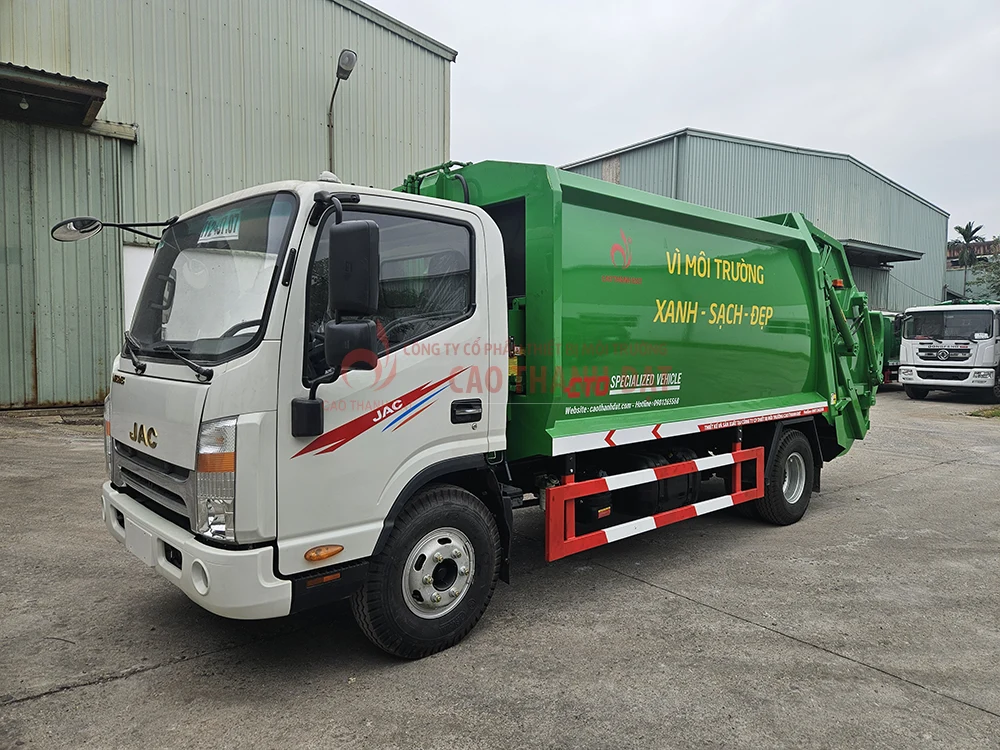
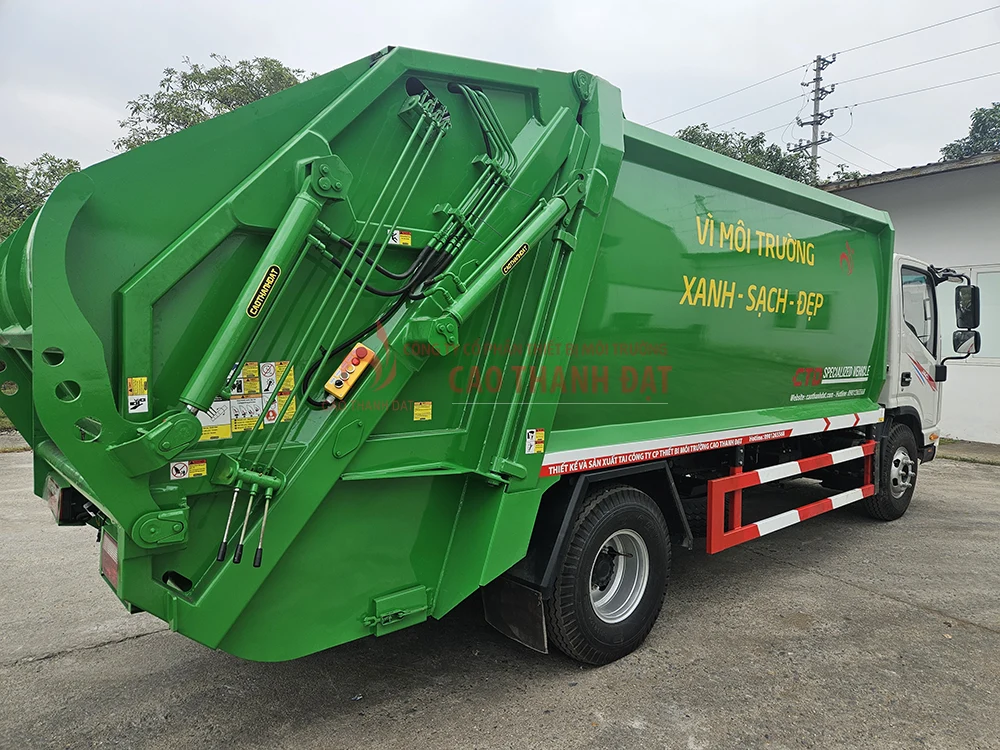
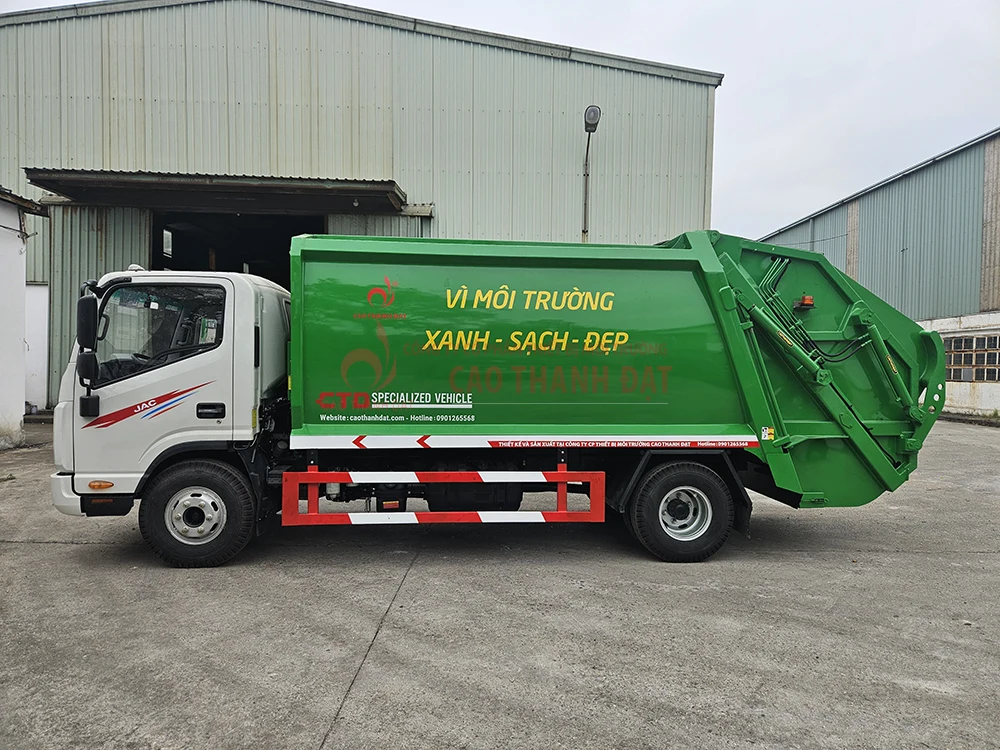
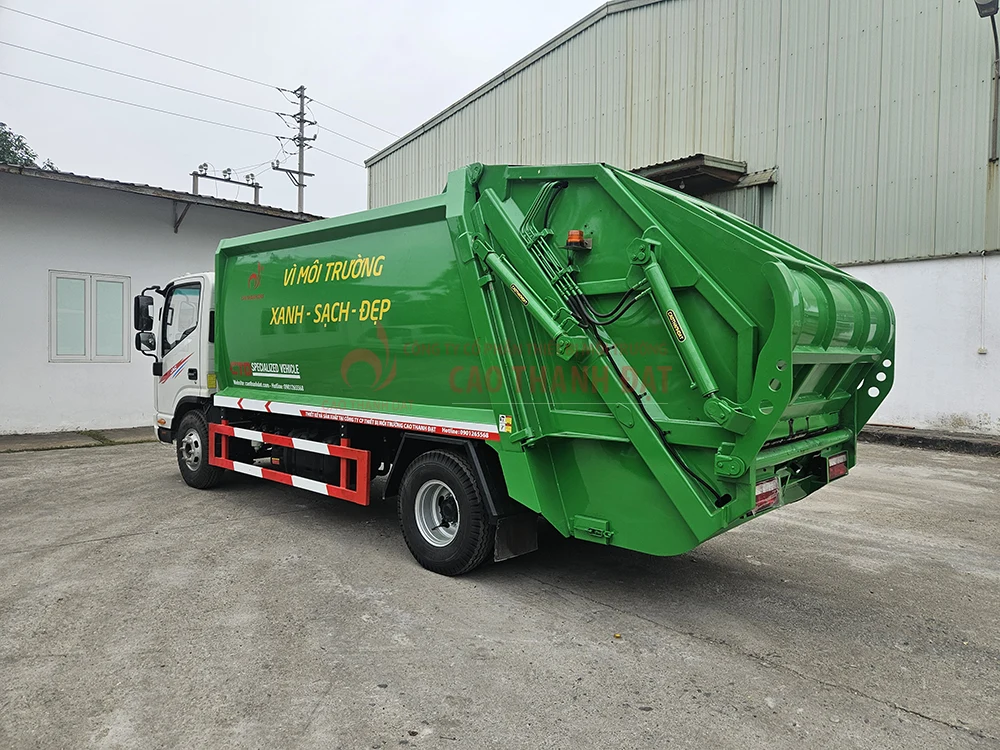
JAC Garbage Truck N750 (Bucket) is a specialized vehicle designed to collect, transport and compress waste effectively, helping to optimize the waste treatment process and protect the environment. Manufactured by Cao Thanh Dat JSC on the chassis of JAC trucks – a famous brand from China, JAC garbage compactor has high durability, reasonable cost, stable operating performance and fuel-efficient engine, meeting the needs of many businesses and environmental management units.
This garbage truck is suitable for collecting household waste, industrial waste, medical waste in cities, urban areas, industrial zones, hospitals, schools and residential areas with high environmental sanitation needs. Depending on the collection model, users can choose the bucket mechanism or the bin lifting mechanism.
I. Structure and features.
1. JAC N750 chassis and engine
- JAC garbage trucks are manufactured on a sturdy chassis platform, with good load-bearing capacity, helping to operate stably on many types of terrain.
- Powerful Diesel engine, applying Euro 5 standard technology, helps the vehicle operate durably, save fuel and minimize environmental pollution.
2. Garbage compacting system
- The hydraulic garbage press mechanism helps automate the garbage collection process, reducing manual labor, ensuring fast and efficient collection speed.
- The garbage compacting system uses a powerful hydraulic system designed by Cao Thanh Dat JSC, which helps compress garbage at a high rate, optimizes storage space and reduces the number of transportations, helping to save costs.

3. Trash container
- The trash can is made of stainless steel, anti-corrosion, ensuring high durability and resistance to environmental impacts.
- The container volume is 10m³, helping the vehicle serve many different waste collection needs on different scales.
- The container has a sealed gasket system to prevent odors and leachate from leaking into the environment, ensuring hygiene during transportation.
II. Technical specifications
| SPECIFICATIONS | JAC GARBAGE TRUCK 10M3 (BUCKET) |
|---|---|
| Brand, Model | JAC N750 E5/CTD-CER01 |
| Gross weight | 11.500 Kg |
| Wheelbase | 3.855 mm |
| Container volume | 10 m3 |
| Overall dimension (LxWxH) | 7.260 x 2.200 x 2.740 mm |
| Engine | D30TCIE1 |
| Max power (ISO NET) | 115 – 3.200 (Kw-RPM) |
| Engine displacement | 2.977 cm3 |
| Tires | 8.25-16 |
| Material | Perform 700 – thyssenkrupp (Germany) Hardox 450 – SSAB (Sweden) |
| Compact force | 10.000 kgf |
| Hydraulic system | Imported from Europe |
| Control system | – Manual – Automatic |
| Garbage collection system | Large volume trash bucket |
| Optional equipment | – Camera for monitoring inside tailgate – Automatic compacting system – Deodorizing system – Hydraulic error reporting system |
III. Outstanding advantages
- Reasonable price, low investment cost: Compared to garbage compactors from Japan or Europe, JAC garbage compactors have a more reasonable price, suitable for many businesses and environmental management units that want to optimize their budget.
- Durable, fuel-efficient engine: The vehicle uses a Euro 5 diesel engine, which helps save fuel, ensures emission standards and is environmentally friendly.
- Powerful hydraulic pressing system: The vehicle can quickly roll, press and discharge garbage, helping to improve garbage collection efficiency, reduce the number of transportations and save operating costs.
- Sealed and safe container: The trash can is resistant to leachate leakage, limits odors, helps protect the environment and ensures hygiene during garbage collection.
- Flexible operation on many terrains: JAC garbage trucks can easily operate in small urban areas, narrow alleys or large areas, meeting many different garbage collection needs.
- Easy maintenance and repair: Available spare parts system, reasonable maintenance cost, helps businesses save repair costs and maintain stable operation for a long time.
IV. Application
- Collecting household waste in residential areas, apartments, urban areas, schools, hospitals.
- Street cleaning: Collecting and processing garbage from roads, parks, beaches, tourist areas.
- Collecting industrial waste in industrial parks, factories, and production plants.
- Transport hazardous waste from hospitals, medical facilities, laboratories, helping to safely dispose of waste.
Jack –
Good one!